This Land Was Made for You and Me
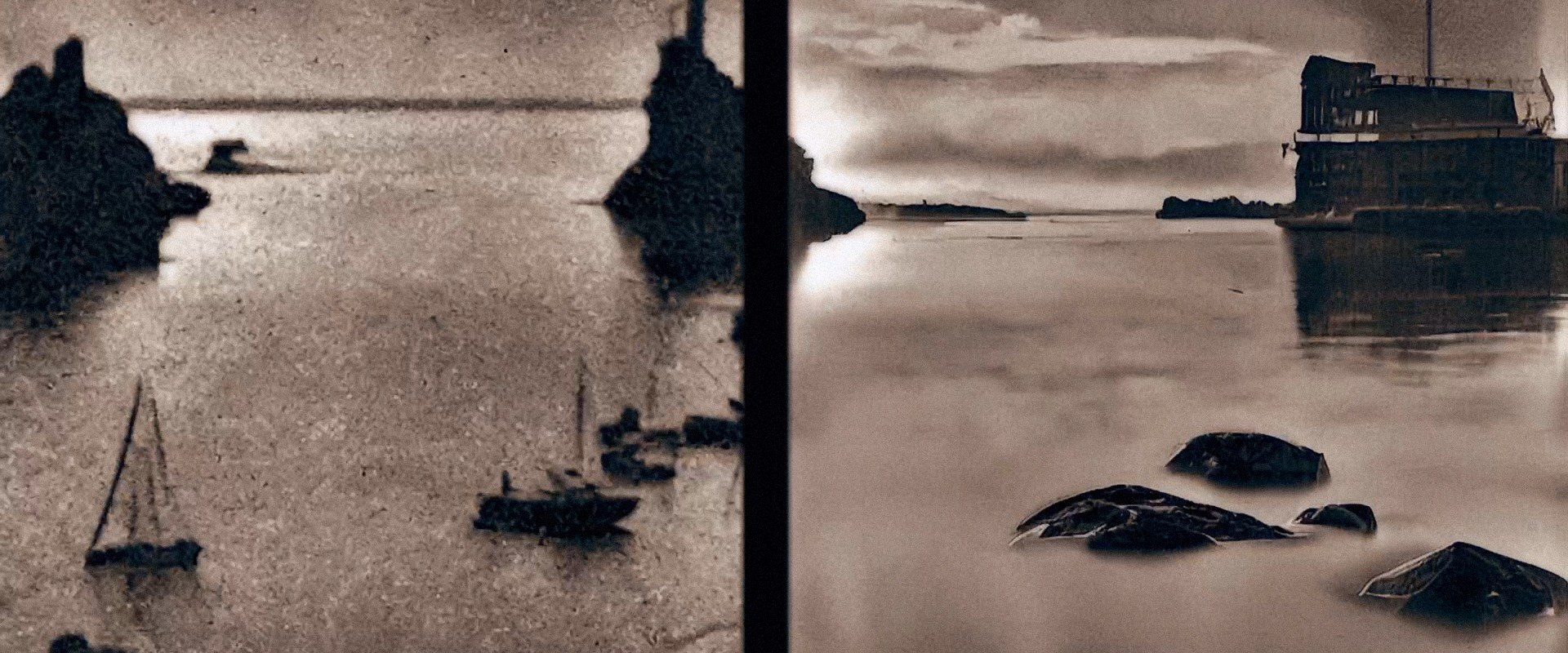
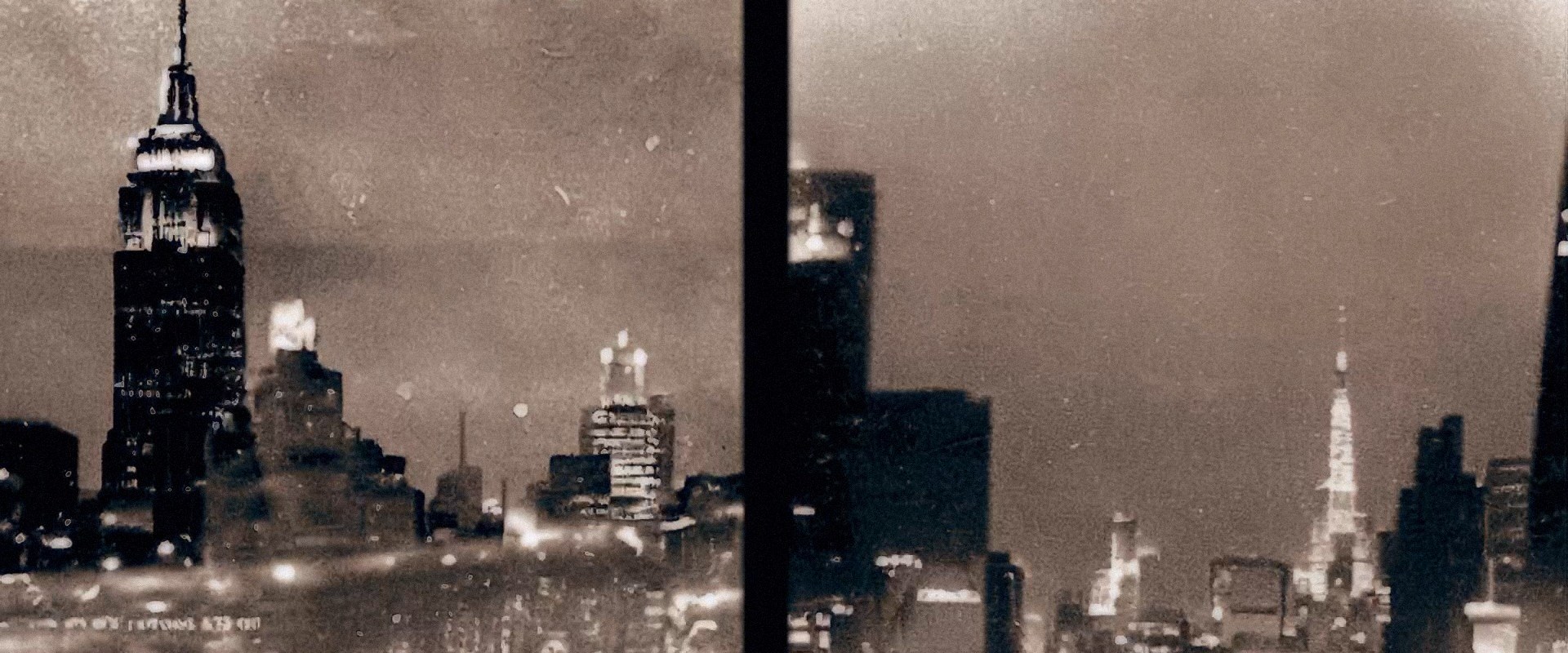
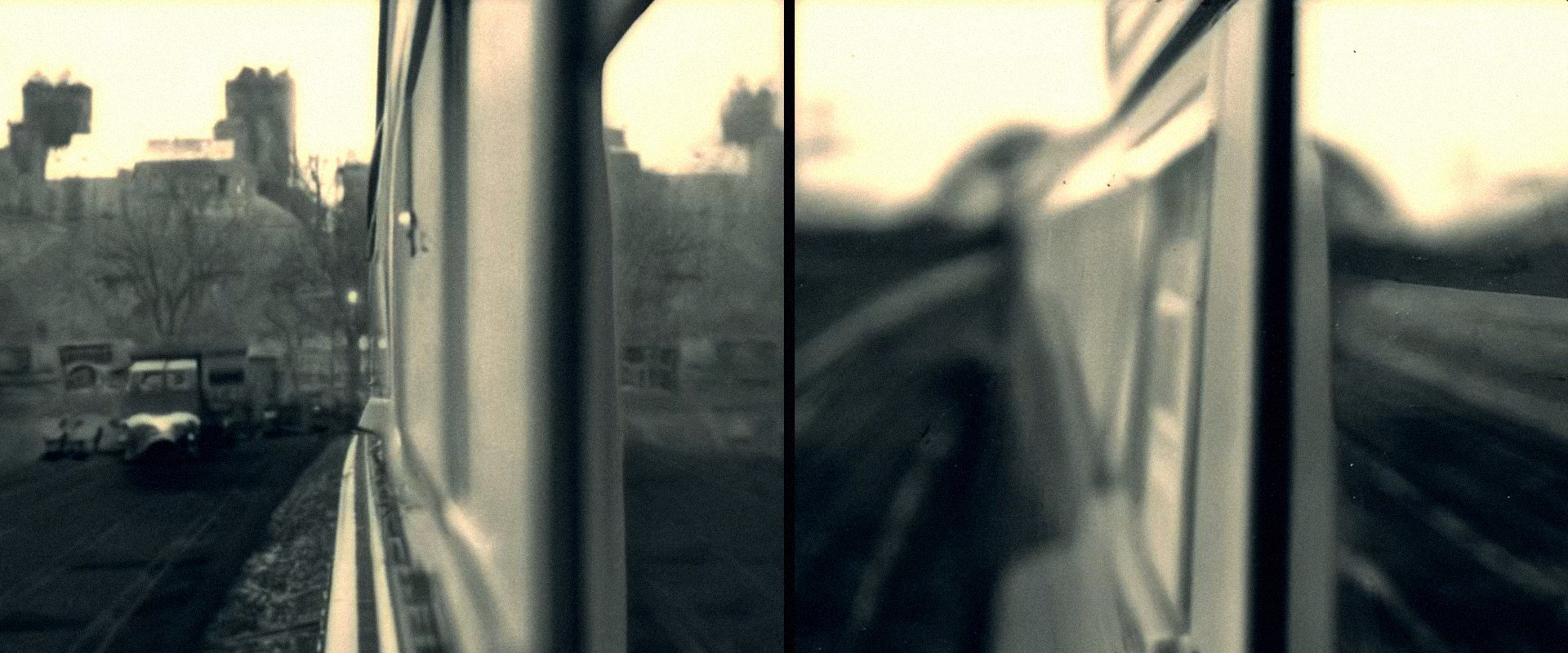
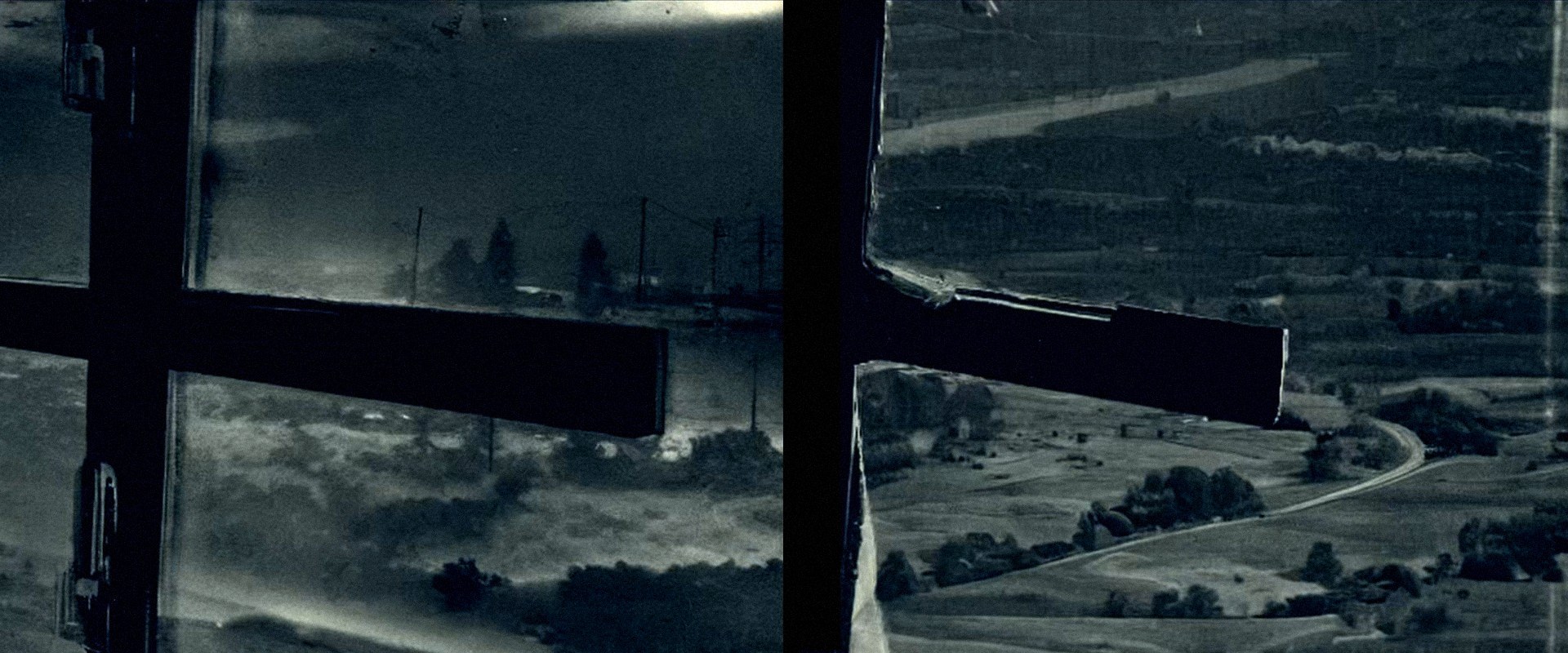
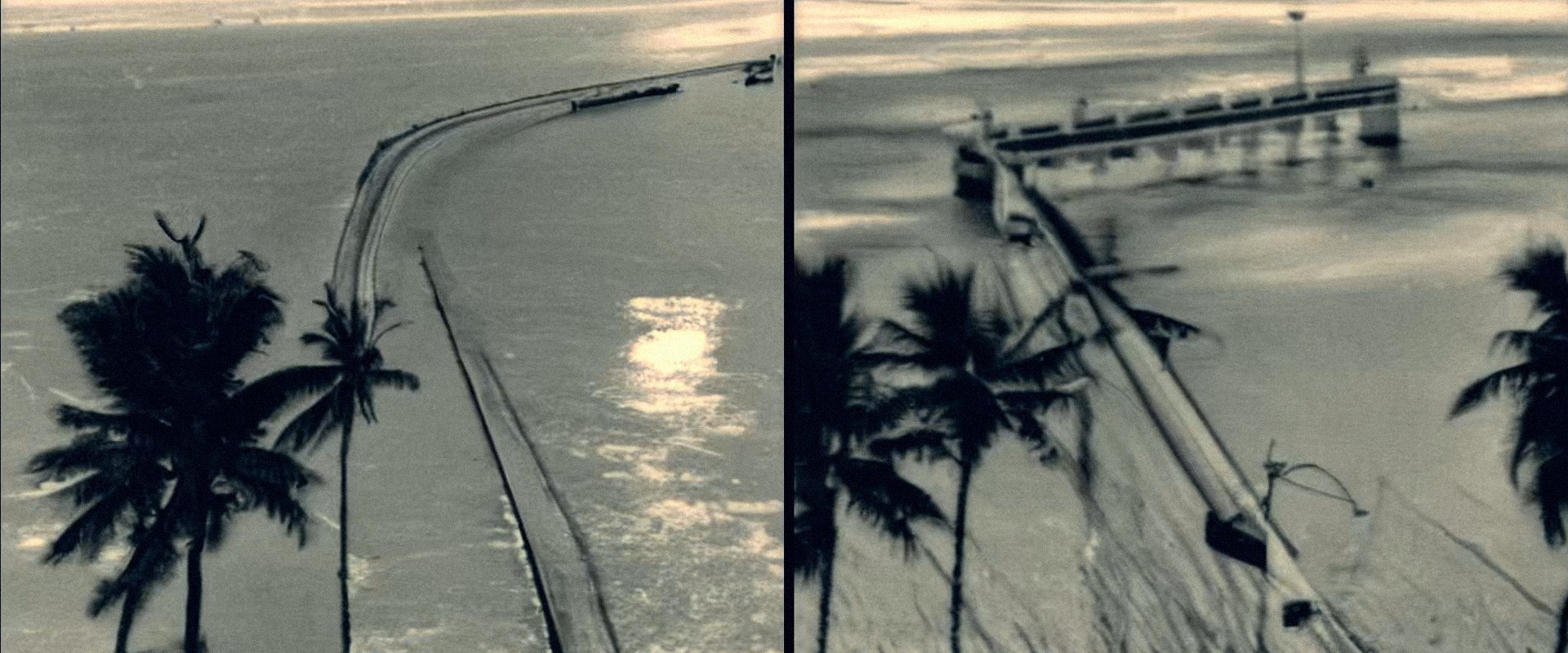
In a single hand-held camera movement, This Land Was Made for You and Me travels across mid-century America, from a lighthouse on the New England coast to old people in rocking chairs on their front porches in southern California.
Nothing in it was photographed. Every frame was generated by a neural net from a written script. The camera’s path alone comes from the real world: it was tracked from a hand-held camera exploring an unremarkable patch of ground, and that path gives the film its swerves and its changes of speed as it crosses the continent.
The script set two things: the look of the image at any moment (“b&w, vintage, 1930s, Walker Evans,” and so on), and the scenes as they shift from one to the next. Each frame is a still image generated from its own string of words, with no explicit relation to the frames before or after it. What appears to be continuous motion is a series of separate pictures, which is very unlike the way a film camera captures movement. The frame rate is slow, with an accentuated flicker-rate, and the soundtrack is the clatter of an old 16mm projector, its cadence matched to the pace of the frames.
The result surveys a false but compelling space of mid-century memory and an equally falsified landscape of the nation. The images are synthetic through and through, though carefully tuned. Projected in 3D, they take on an odd beauty, and the film turns on that ambiguity: faked photographic frames evoking a faked America.
The title is the refrain of Woody Guthrie’s “This Land Is Your Land” (1940), which he wrote as a pointed reply to “God Bless America.” Its verses about a private-property sign and people lined up at a relief office were later dropped, and for decades the song was sung as a hymn to patriotism. The title therefore belongs to the film’s subject: a picture of America that had been falsified long before any neural net got to it.
Downie and Kaiser.